Disneyland Park | Walt Disney Studios Park | Disney Village | Resort Hotels | More

Walt Disney Studios Park » Production Courtyard » Studio Tram Tour: Behind the Magic

presented by Orange

Attraction Brief

Tram ride past props, scenery and more, with two large special effects sequences.

Opening Date

16th March 2002

Duration

20 minutes

Capacity

168 Guests per tram

Still from the Dinotopia TV Series

Catastrophe Canyon in Florida

Disney-MGM Studios Europe plan


Climb aboard the state-of-the-art Studio Tram for an action-packed, behind the scenes tour to where movie magic is made. You'll see the intricacy of the Boneyard props and the majesty of a full-scale movie set. Then, expect the unexpected as your tram takes a detour into the Catastrophe Canyon film set...

Attraction Experience

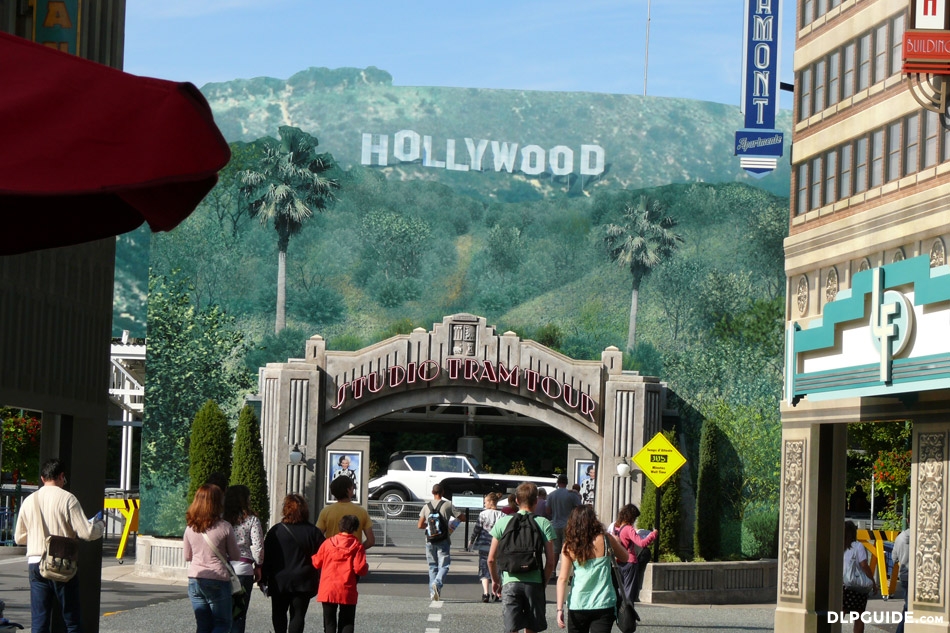
Nestled between Art of Disney Animation and The Twilight Zone Tower of Terror, the entrance of Studio Tram Tour beckons you as soon as you enter the park.  The entrance is a temporary facade, made up of several layers displaying key scenes from the ride ahead (Catastrophe Canyon, Reign of Fire) on a visible white steel frame.  In front of the attraction, a large bonsai tree forms the centre of a small hub, with your very first glimpse of a famous movie icon beyond – Cruella’s classic car from 101 Dalmatians!

You enter the queue on the right and stroll past bright red movie poster displays matching the star-patterned design of the trams themselves.  Floating through the air are the themes from such classics as Star Wars (1977), Chariots of Fire (1981) and 37°2 Le Matin (1986).  When you reach the boarding point, your tram pulls in and its side wall magically lifts into the air to let guests in and out... it’s like something from the movies!

Once onboard, a short animation presenting the attraction’s sponsor, Orange mobile, plays, and then the doors close and it’s time for the magic to begin!  Your tram slowly pulls away from the station towards the Costuming building and the Props Boneyard, and your two hosts take a moment to introduce themselves on the LCD screens in each carriage.  Irène Jacob presents in French, whilst for English guests, Jeremy Irons takes the reigns:

“Indeed, it’s our pleasure to be your guides on the Behind The Magic studio tour. Today, we’re going to focus on the talented people who work behind the camera to make the magic, the mayhem… and the Mochas.”

Attraction Guide

Overview

Attraction Experience

Fun Facts & Footnotes

History

Photos Magiques Gallery

Tips & Advice

Rated as: Family Adventures

Children 3-7
Children 8-12
Teens
Adults
Seniors

Wait time: Long

More like this...

Armageddon: Special Effects

Pirates of the Caribbean

More nearby...

The Twilight Zone Tower of Terror

Art of Disney Animation

Text Supplied By WDS Fans

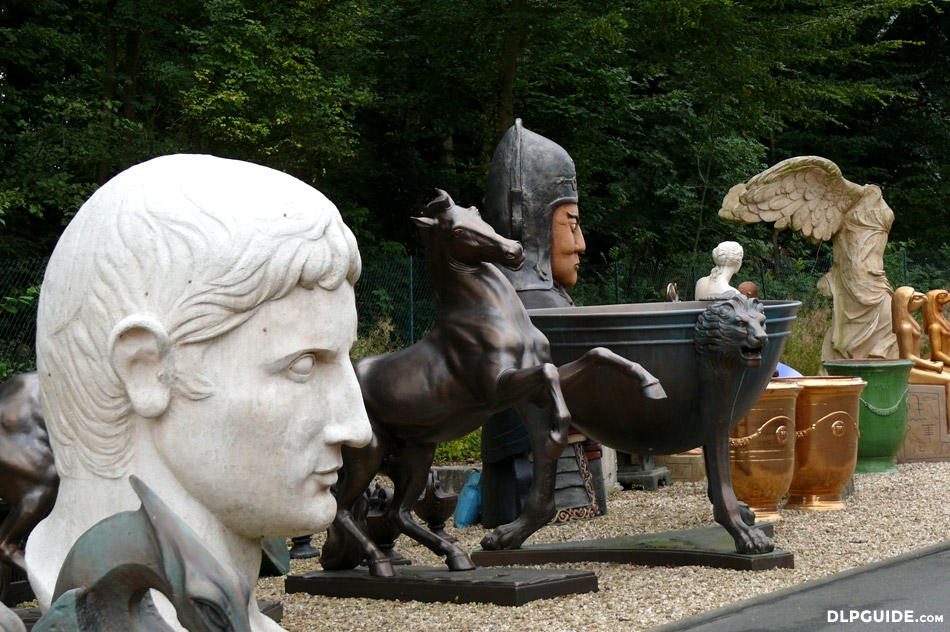
Taking a gentle turn to the left, your tram enters the Props Boneyard and travels through a thick forest road populated with props, animatronics and vehicles from movies gone by, waiting for another chance in the spotlight.  Amongst props from Dinosaur (2000), 102 Dalmatians (2000) and Armageddon (1998) lie long-forgotten pieces from non-Disney productions.

“In the early days of cinema almost everything was filmed on studio sets.  This changed when French New Wave directors like Truffaut and Godard took their camera to the streets.”

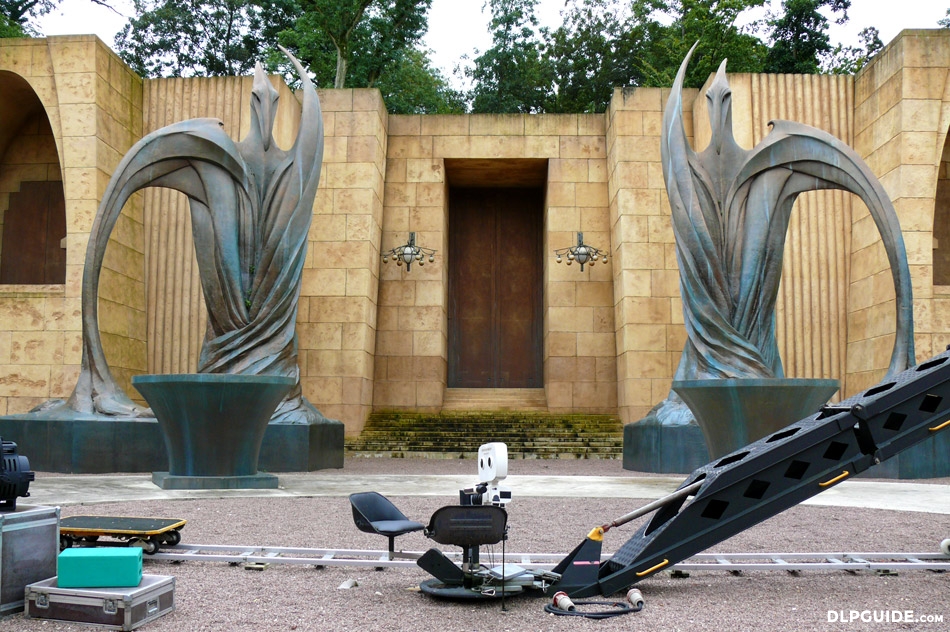
Your tram rounds the corner and the towering Art Nouveau palace of mythical kingdom Dinotopia comes into view, with two enormous statues either side of the towering entrance gate.  Film and sound equipment including a curved camera track is already in place, but this is only half the story...

“But shooting on location is not always practical.  After all, not many cities will give you a permit for a tidal wave or an alien invasion.  So, today, many filmmakers still use the controlled environment of the studio Backlot, like the set you see here from the dinosaur production Dinotopia.

“They only build what they need for the actors, but to make this mythical city even more spectacular the filmmakers brought in visual effects artists armed only with imagination… and powerful supercomputers.  They also added the story’s biggest stars – the dinosaurs.”

On the video screens, final shots of the epic production are played to show the backlot palace set in its CGI-enhanced starring role, before the tram continues to its next location.  Passing through a small safety gate to the day’s hottest set and back into the world of reality.

“When only the real thing will do the physical effects department goes to work, to create fire, explosions… and rain.”

As CGI rain falls on Jeremy Irons, you pass by countless Egyptian props and scenery items in Props Boneyard 2, such as detailed backdrops and murals, ancient giant statue heads and recreated canyon walls.

“Will you tell those computer guys to give it a break please? We’re talking about physical effects here. Our director said they’re shooting a scene that’s loaded with special effects, it’s extremely dangerous and completely off limits.  Shall we...?”

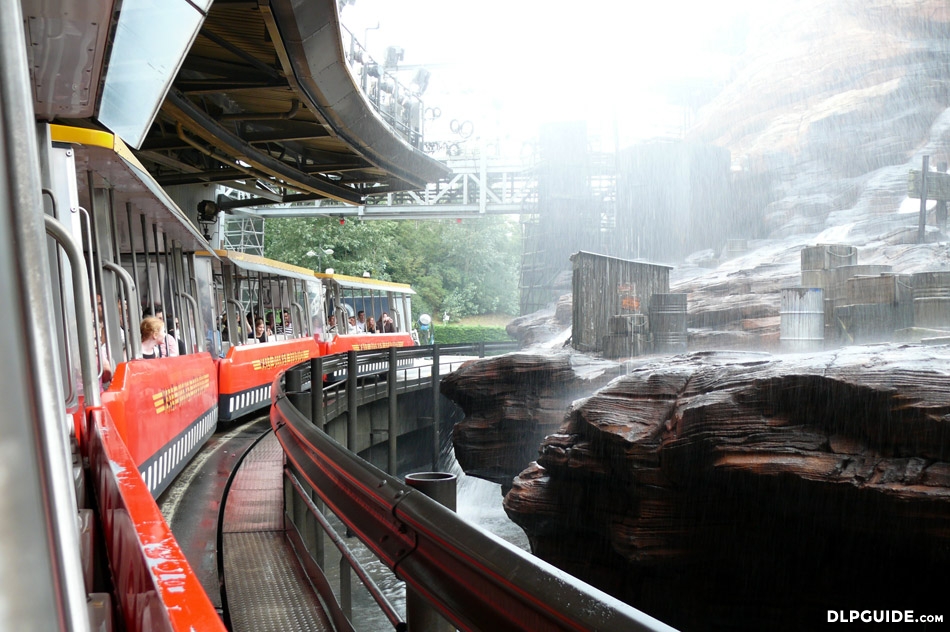
The tram rolls slowly past the thundering water pumps and enters into the vast steel scaffolding construction of Catastrophe Canyon.  One through the lighting rig, the scene is set – a canyon in the wilds of the USA, a treacherous thunderstorm and an oil tanker in distress – and you’re travelling right through the heart of the action!  Suddenly, your tram stops in the centre of the shoot.  “Prêt?” the director yells, from off-scene.  “Oui!”  “Vrai!”  “Roger contrôle!” shout back the assistants.

Wait, you aren't the extras! Too late, heavy rain is pouring down on the catastrophe about to unfold and within seconds a thundering road has ripped through the backlot.  As props shudder and shake in synchronisation, the tram and all its guests are thrown into the action as the canyon floor gives way and each carriage rocks up and down in a thrilling piece of movie magic.  As the trembling continues, a telegraph pole comes loose on-cue and smashes into the tanker, causing sparks to fly all over!  Soon, these aren’t the only sparks – the rear of the tanker is quickly engulfed by shooting flames, followed by the oil pipes and tower around the set.

As the burning blaze proves the ultimate acting tool for your talented group of startled extras, the scene isn’t over yet!  A distant rumble builds to an immediate thunder, and in an instant the fires are extinguished with the help of 265,000 litres of water coming hurtling down the canyon edge, right towards your tram, bringing the sizzling oil tanker with it.  As the flash flood continues, your tram teeters over the edge of the rock face and hundreds more gallons of water fly over the roof of the set and into the canyon, missing you by mere millimetres.  This is special effects precision at its best.  ...And cut!  Oh dear, the director wasn’t pleased with us overrunning his one and only take – time for your tram to make a hasty departure!

“I can’t understand it, I thought you all did a great job of looking terrified but apparently you didn’t get the part.  Pity.”

The tram rounds the back of the set and the full system of scaffolding, scenery, pipes and control equipment can be seen its all its bare detail.

“Now that you’ve passed your trial by fire and water – and earthquake, I suppose you’re entitled to see just how those effects were put together.  After the earthquake and fires, we opened three gates at the top sending 265,000 litres of water crashing into the truck.  And us.  Well, you.  I’m in a dry studio.

“Did you know that the water pumps used in that scene are strong enough to launch someone a hundred metres into the air!  Any volunteers?  Physical effects can get very complicated.  Just imagine how many were in a movie like Pearl Harbor.  One scene called for a row of 17 battleships to explode on cue.  Now, that’s a hot set!”

Takings its cue from Jeremy Irons, the tram next heads past a series of real aeroplanes from Touchstone’s Pearl Harbor (2001) epic, complete with bullet holes and a small military base backdrop.

“The aeroplanes on this route were used in the movie Pearl Harbor and are stored here on the lot ready to be drafted into service for a future film.”

Turning a sharp right back towards the main Studio courtyards, the next stop on the tour is the grand Costuming Workshop.  Passing right by the building through an enclosed canopy, you’ll first get a glimpse at costumes from productions such as CinéMagique and The Chronicles of Narnia, before the full costuming workshop is presented to you.

“Few things help actors to get into character as much as their wardrobe.  It’s one of the most important tools we use for our work… after our mobile phones of course.  [Calls Irene Jacob] Excuse me, where’s my costume?  [Is magically given a brightly coloured Jester costume]  I was thinking of something a trifle more understated… Well, anyway…  Try to imagine the most famous actors in film without their costumes.  No, you know what I mean…”

The tram continues past the loading station, with the impressive skyline of Disney Studio 1 and the other soundstages to your left and the Hollywood Tower Hotel filmset up ahead.  As you pass the Disney Character Topiary garden, part of the studio backlot’s Greenery department, the guides take a moment to honour the four other Disney Studios before Paris – Hollywood, Los Angeles, Burbank and Orlando.

“Do you recognise those famous movie stars?  They’re great to work with.  They never steal your scenes, they follow directions and they don’t need make up… just a little bit of wax.”

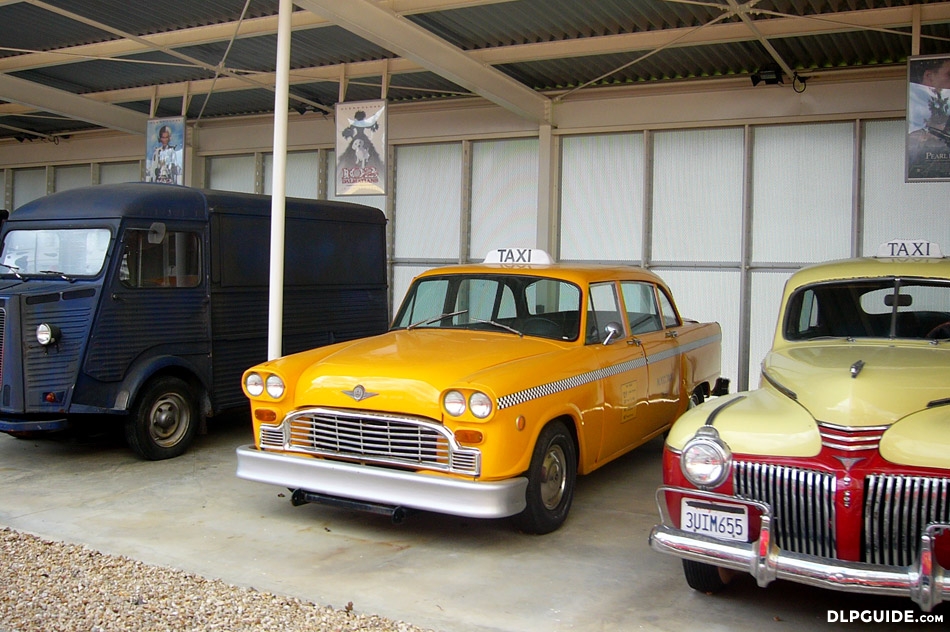
En route to the final London filmset, this is the Star Cars Garage, home to over twenty classic cars from blockbuster movie productions.  Everything from horse-drawn carriages to NYPD cop cars is covered, including dalmatian-spotted London taxi from 102 Dalmatians, period cars from Pearl Harbor, a submarine from Dinotopia and a moon buggy and ice cream truck from countless comedy productions.

“The beauty of a Backlot is that you can turn a corner and be anywhere – London for example.  But London as you’ve never seen it before – scorched, by dragons.”

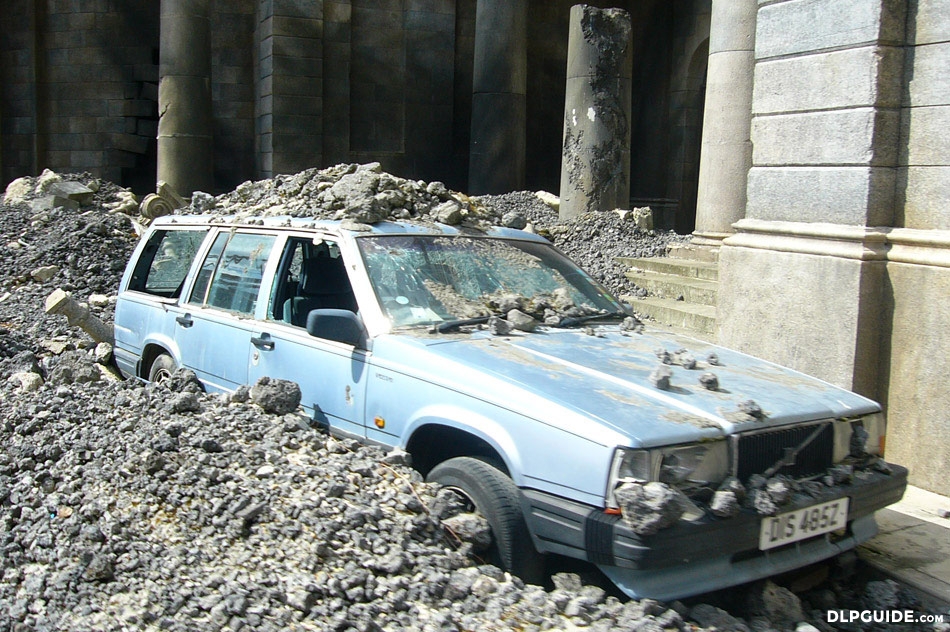
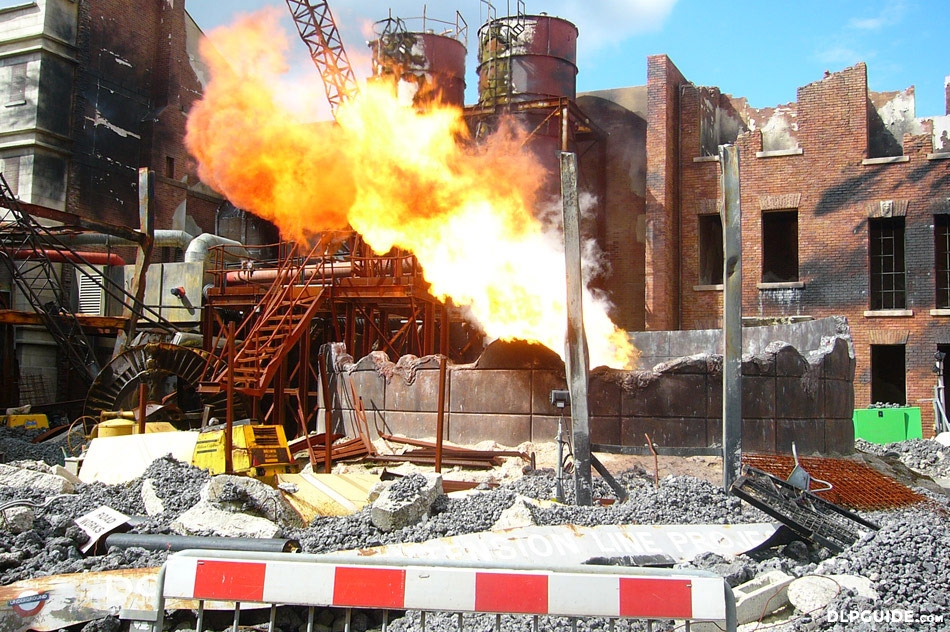
Up ahead is Hayne Street tube station, this is London, England!  A faithfully recreated, full-scale film set vision of jolly old Brittannia... but wait – not everything here is jolly.  This an intricate set from Touchstone's Reign of Fire (2002)!  A building has collapsed, a car windscreen smashed, a construction site in chaos – a railway carriage scorched!  With an angry rumble and a gentle cloud of smoke floating from the tube line construction pit, it all becomes clear... too clear!  Suddenly, a fiery blast of fire bursts out from deep underground and narrowly misses your tram.

This is special effects stunt work at its most intense, followed by a drive through the tense warm-up area of Moteurs... Action! past armoured vehicles from The Rock and more.

Phew – time to call it a wrap?

“And with that, we fade our time on the Behind The Magic tour.  We hope you share our admiration for the amazing draftspeople, writers, directors and all who help us actors make dreams… real.  Even though our tour is over, keep your eyes open.  You never know who you might run into at the studios.  And if you see any real dragons out there – slay them for me.”

“That’s a wrap!”

Fun Facts & Footnotes

The Props Boneyard doesn't just feature props from Buena Vista movie releases - amongst the memorabilia you might also spot items from past Disney attractions around the world, such as Epcot's old Horizons pavillion (a Solosub (now in Backlot Express) and Hovercraft).

The Dinotopia palace set isn't the exact model used for filming the miniseries and series, but rather a reproduction built at the same time as the original to the same specifications.  Animatronic alligators and other props can be seen in the Props Boneyard just before the set.  During the park's opening month, US group Destiny's Child shot performances of several songs on the set at night, for use on the Disney Channel and as park publicity footage.

Catastrophe Canyon is truly a wonder of Imagineering.  It was designed in 1987-89 for both the Paris and Florida Studio parks and is totally unique in the world of Disney theme park attractions.  After shaking props, tilting the trams and setting fire to an oil tanker and two petrol towers, they release 265,000 litres of water to come crashing down the canyon from four huge storage tanks, causing the truck to slide down the canyon with it... only to then reset the whole show in four minutes for the next tram-load of eager guests.  All the water is recycled, using water pumps powerful enough to lift someone 100 metres into the air to redistribute the water to the three canyon tanks and finally the fourth tank above the tram.  The fire is created by igniting propane gas, but - since propane burns transparent - a small carbon additive is included to give the flames their fiery orange appearance.

The Costuming building doesn’t actually produce costumes for movies – this is infact the workshop for costumes worn by Cast Members throughout the entire resort.  Those on show in the live workshop, however, are usually from the resort’s key seasonal entertainment productions.  Look out for Savannah animals, CinéFolies dresses or Halloween horrors!

Hayne Street Station is the fictional London Underground station used for the scorched Reign of Fire set.  A name is never given to any Tube station in the film, and the reason for this title remains unknown to this day.  A real-life Hayne Street can be found in London EC1 near Barbican Station, above a railway line.  And, incase you’re wondering – the ticket barriers are an old style and won’t accept Oyster cards!  Infact, they don’t appear to be barriers from London at all.

Merton Street EC1, named with a small sign as the tram travels under the railway bridge, doesn’t appear to be a real London street.  Many of the advertisement posters are also fictional, displaying products from soap to musicals, cars to magic shows.  The red #13 Routemaster double-decker bus (now largely replaced by more modern versions in London), however, features one real advertisement – for Disney’s The Lion King at the Lyceum Theatre.  The entire set is also authentic down to British  postboxes, traffic lights, road crossings and number plates.  The only unharmed cars in the scene are provided by Vauxhall, the UK division of Opel, a park sponsor.

The fire in the Reign of Fire scene is created using the same methods as that at Catastrophe Canyon, albeit with a “blast” method of shooting the flames towards guests.  The gas is stored in two large towers behind the sets.  The set was constructed using parts of the Dublin original.

History

Studio Tram Tour is one of very few key attractions remaining from the original Disney-MGM Studios Europe masterplan for the second park of Disneyland Resort Paris.  Designed in conjunction with the Backlot Tram Tour at Disney-MGM Studios Florida, the late 1980s version saw trams departing from a station in the Backlot (roughly where Moteurs... Action! is today) for a tour through the Studios' real production stages and sets, including the trademark Catastrophe Canyon and several New York and European street sets.  Whilst Disney-MGM Studios opened at Walt Disney World in Florida in 1989, the European version (originally scheduled for 1995) never made it from sketch to reality.

In 1999, when Disneyland Paris was through the worst of its financial difficulties and management decided a second park was feasible, the Backlot Tram Tour again became a key attraction in the revised plans for the new Studio park.  Given prime position right outside Disney Studio 1, the tram tour would now pass through the park's small forest to a displaced Catastrophe Canyon, before doubling back on itself past the already-under-construction Costuming building to an undecided final set-piece.  With no real studio production at the new park, the Imagineers would need to create all the movie magic themselves.

Lost concepts for the attraction include an ape-inspired film set in the middle of the forest, an in-depth tour of the Stunt Show backstage and a set of military props between the station and Costuming building, which likely became the Pearl Harbor set after Catastrophe Canyon.  The design of the final loading station is remarkably similar to the original Disney-MGM Studios Europe design.

Catastrophe Canyon was finished and operational as quickly as early 2001, but many of Studio Tram Tour's elements did not even make it to the drawing board until the same year.  With one year to go until opening, resort management shook up the park plans, replacing a Sound Effects Show in Production Courtyard with Flying Carpets Over Agrabah in Animation Courtyard, and, for Studio Tram Tour, the highly detailed Reign of Fire set.  The film Reign of Fire itself, produced by Disney's Touchstone label, was not even released to cinemas until July/August of 2002.

Studio Tram Tour: Behind the Magic officially opened with the rest of Walt Disney Studios Park on 16th March 2002, with four six-carriage trams designed and built especially for the park.  Unlike Disney-MGM Studios Florida's Backlot Tram Tour, the Parisian version does not feature live commentary by a Cast Member.  Instead, LCD video screens were installed in each carriage of the trams to provide a video commentary by famous faces from European (and Worldwide) film.

Originally, six languages were available: English (Jeremy Irons), French (Irène Jacob), German (Nastassja Kinski), Dutch (Famke Jansen), Spanish (?) and Italian (Isabella Rosselini).  Each carriage presented two languages at once - English & French, Dutch & German or Spanish & Italian - and the setting of languages for each carriage could be controlled by the Cast Member at the front of the tram based on guest demand, with English/French usually featured in at least 3 to 4 of the 6 carriages.  Separate queues were provided for each of the three language groups, creating a true maze of queue lines and some disappointed guests, should one language group have a longer queue than others.  After three years, in April 2005, the Dutch/German and Spanish/Italian versions were lost, leaving Jeremy Irons and Irène Jacob to commentate for all guests and solving many queue nightmares.

In addition to the three different language queues, Studio Tram Tour also originally featured Disney's Fastpass, with a mirrored queue system on the left of the entrance, giving a grand total of six queues for the attraction.  With 168 guests per tram and departures every 7 minutes, it was decided before the end of 2002 that Fastpass simply wasn't needed, and so the old Fastpass queues were then used by the standard Dutch/German and Spanish/Italian lines, leaving the entire right-hand queue system for French/English.  Currently, the standard Fastpass clock is still visible, and the machines themselves are still in place and connected to the park's computer systems.  The white metal canopy is usually now used for stroller storage whilst guests take the tour.  The left-hand queue and even much of the right-hand queue is never used.

The windows of the Costuming Workshop are regularly updated with the latest, real costumes from big Walt Disney Pictures productions.  Upon opening in 2002, the costumes featured were from Pearl Harbor and 102 Dalmatians.  From 2004, costumes from CinéMagique replaced those of 102 Dalmatians.  The latest change, in December 2005, saw both windows be replaced by a large collection of costumes from The Chronicles of Narnia: The Lion, The Witch and The Wardrobe (2005).

Studio Tram Tour now closes around once every 12 months for a full clean-up of its props, sets and trams.  It was not until 2005 that the first major refurbishment took place, however, meaning some of the original Props Boneyard items had become too weathered to remain outside.  They were instead moved to Backlot Express.  Besides the filming equipment added to the Dintopia set in August 2002, Studio Tram Tour has yet to receive any major additions to its collection of props and sets since opening.

The attraction poster for Studio Tram Tour on Disney Studio 1 declares the attraction to be located in Backlot, despite its Production Courtyard placement since opening.  Is this a mistake, or simply a hint to the future?  It is widely believed that, eventually, the loading station of Studio Tram Tour will be displaced further back, towards the Backlot, to allow for greater expansion of the park, explaining its temporary appearance.  The same concept was used in Florida, with the tram tour station originally placed to the right of the Great Movie Ride before later moving further into the Backlot.

© DLRP Magic!

Some items © Disney.

This website is independant of and not supported, endorsed by or connected
to The Walt Disney Company, Euro Disney Associés S.C.A., Disney
Enterprises, Inc. or their subsidiaries and affiliates.